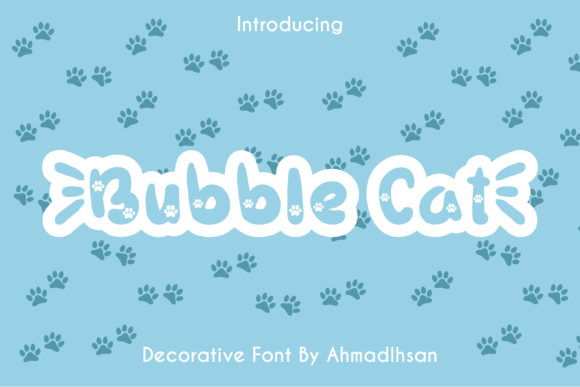
Bubble Cat Font: A Chunky Display Typeface for Digital Expression
In the crowded space of web design, establishing a distinct visual voice is paramount. Typography isn't just about conveying words; it’s about setting tone, guiding emotion, and building immediate rapport with a visitor. When a font like Bubble Cat enters your asset library, its purpose is clear: to inject personality without sacrificing clarity. This sweet and chunky lettered display font offers a friendly feel that is both versatile and strategically useful for a wide array of digital contexts.
The Digital Character of Bubble Cat
Bubble Cat’s visual characteristics are its greatest asset. The chunky letterforms provide substantial visual weight, making each character feel grounded and present. This isn’t a delicate, thin script; it’s a font with substance. The “sweet” descriptor speaks to its rounded edges and approachable geometry, which avoid sharp, aggressive angles. This combination creates a personality that is warm, confident, and engaging—a perfect foundation for brands that want to feel human and trustworthy online.
For a web designer, these traits translate directly to layout performance. The generous stroke width ensures that even at smaller sizes (within reasonable display limits), the font maintains its integrity and legibility. In hero sections or as a primary headline on a landing page, Bubble Cat commands attention without shouting. It’s the visual equivalent of a firm, friendly handshake.
Building Visual Hierarchy with a Display Font
Effective web design relies on a clear visual hierarchy to direct user scanning behavior and focus. Bubble Cat is inherently a display font, meaning it is designed for prominence. Its primary role in a layout is to establish the top level of that hierarchy.
Consider a typical conversion-focused layout: a product landing page. Using Bubble Cat for the main product title or the key value proposition headline immediately anchors the page. Its distinct style sets it apart from all subsequent body copy and supporting text. This clear typographic contrast guides the user’s eye naturally: they see the bold, friendly statement first, understand the primary offer, and then proceed to scan the supporting details. In app screens or SaaS interfaces, using Bubble Cat for feature section titles or modal headers can create a refreshing break from an otherwise utilitarian interface, enhancing engagement.
Practical Applications Across Digital Formats
- Website & Landing Page Headers: Bubble Cat excels as the primary headline font. For a creative portfolio, it announces the designer’s name with warmth. For a coaching website or course sales page, it frames the core promise (“Transform Your Creativity”) in an encouraging tone.
- Call-to-Action Areas & Button Text: While typically used for short phrases, its chunky nature can make button text like “Start Free Trial” or “Buy Now” feel solid and clickable, especially when paired with ample padding.
- Online Store Banners & Blog Graphics: In e-commerce, a seasonal sale banner (“Summer Sale”) using Bubble Cat feels celebratory. For a blog, using it in graphic headers for featured posts can increase visual appeal in content sections.
- Branded Web Content & Digital Ads: For consistent online identity, using Bubble Cat across digital ads, email header graphics, and social media assets creates a cohesive brand signature that users begin to recognize.
Readability and Responsive Considerations
Any display font demands careful consideration for readability, especially across devices. Bubble Cat’s chunky construction is an advantage here, but it requires mindful application.
For optimal readability on mobile screens, maintain a sufficient font size. In responsive layouts, you might scale down Bubble Cat for tablet views compared to desktop, but ensure it never becomes cramped. Avoid using it for lengthy paragraphs or complex sentences; its role is for impactful short headlines, labels, or logos. On dark backgrounds or image overlays, ensure strong contrast—a white or light-colored Bubble Cat headline on a dark hero image can be strikingly effective. Conversely, on light backgrounds, its substantial weight holds up well.
A key note: Bubble Cat is best for hero titles, section headings, logo text, and decorative accents. It is not a body copy font. Using it sparingly, as a supporting typography element for key moments, maximizes its impact and maintains professional content readability.
Crafting a Cohesive Digital Identity with Font Pairing
The power of a display font is unlocked when paired correctly. Bubble Cat’s friendly, rounded personality needs a counterpart for body text and UI elements that ensures effortless reading.
A simple, clean sans serif font is the most logical and effective pairing. Think of fonts like Inter, Open Sans, or Roboto for body copy, subheadings, and navigation. This pairing creates a perfect balance: Bubble Cat provides the personality and primary focus, while the sans serif ensures content is scannable and professional. For a more editorial digital identity, such as for a blogger or writer, pairing Bubble Cat with a classic serif font (like Merriweather) for body text can create an interesting blend of warmth and authority.
This pairing strategy extends to all elements. Use the sans serif for buttons (if Bubble Cat is used for the button label, keep it to very short calls-to-action), form fields, and footers. Bubble Cat then becomes the accent that consistently reappears at the top of the visual hierarchy, reinforcing brand tone.
A Note on Technical Implementation and Licensing
Before integrating Bubble Cat into your web projects, confirm its technical specs. Check for webfont availability (typically WOFF2/WOFF formats) for seamless implementation via CSS. Investigate if it includes multiple weights or alternates for greater flexibility. Multilingual support is also crucial if your projects target a global audience.
Crucially, understand the commercial font licensing. For use on websites, client projects, online stores, and digital templates, you typically need a license that covers such distribution. When Bubble Cat becomes part of a client’s brand assets or is embedded in a digital product you’re selling, ensuring your license permits this use is a fundamental professional step. It protects you and your clients.
Ultimately, Bubble Cat is more than a decorative asset. It’s a tool for establishing brand tone, guiding user attention, and creating memorable digital experiences. Its versatility across landing pages, app screens, and online stores comes from its foundational design: chunky enough to be clear, sweet enough to be inviting. By applying it strategically within a thoughtful typographic system, you can leverage its personality to build both visual hierarchy and brand trust, turning creative ideas into engaging, conversion-ready layouts.